


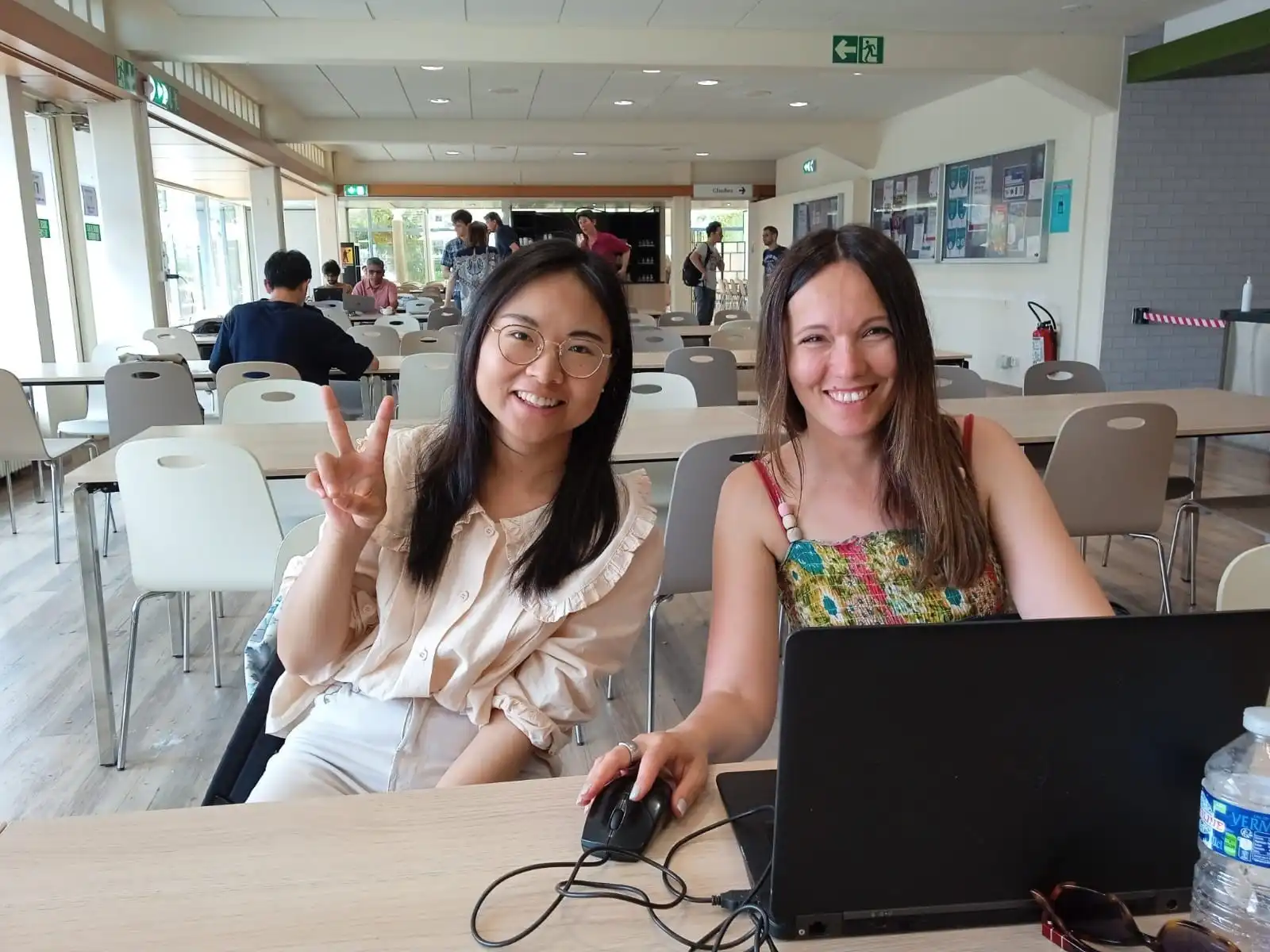
- University of A Coruña researcher Veronika Chobanova, along with Peilian Li from CERN and Sevda Esen from the University of Zurich, are leading an international team of 25 scientists from ten different institutions. They are working on an experiment that has achieved the world’s most precise measurements that could help solve the mystery of antimatter.
- “Making these measurements with the volume and complexity of the LHC data will be an unprecedented technological challenge that requires new solutions in the field of data processing and neural networks,” advances Veronika Chobanova. “And the UDC is very well positioned in these areas.”
A Coruña, June 21, 2023.- In the beginning of the universe, it is assumed that the Big Bang created equal amounts of matter and antimatter, but today’s universe is mostly composed of matter, so what happened to antimatter?
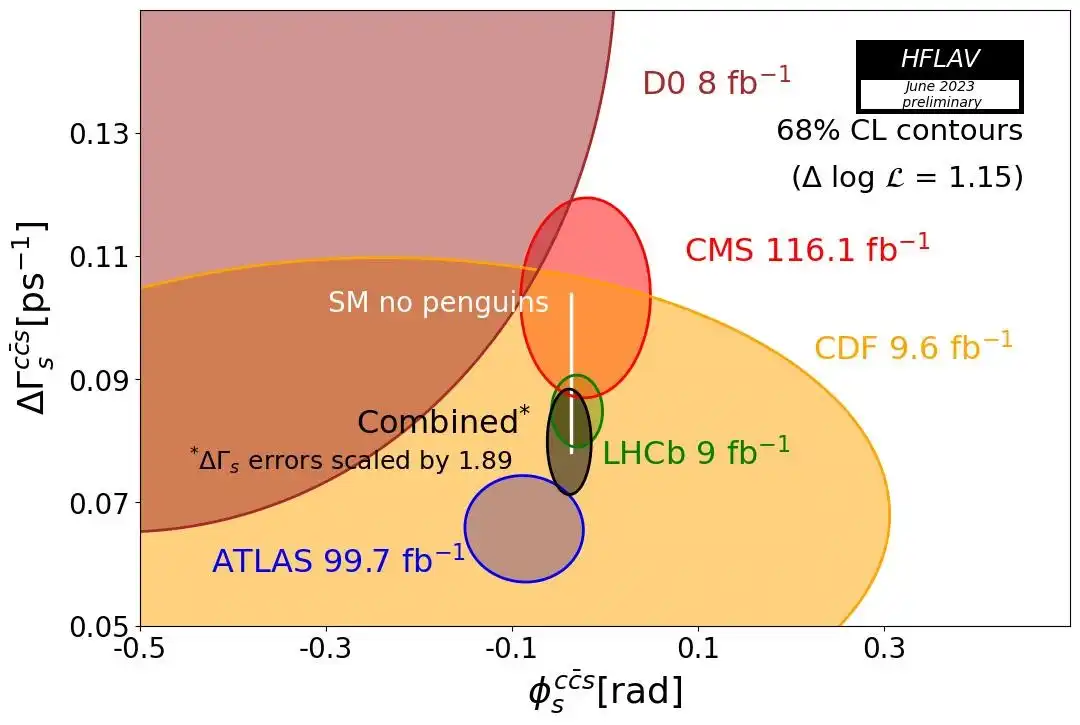
The Large Hadron Collider (LHC) of the European Organization for Nuclear Research (CERN) is dedicated to investigating this type of cosmological mysteries, which could be explained by the existence of particles beyond those we already know. InTalent researcher from the University of A Coruña, Veronika Chobanova, is collaborating with Peilian Li, from CERN, and Sevda Esen, from the University of Zurich, on an international team of 25 scientists from ten different institutions specialized in precision research, specifically analyzing the data from the LHCb experiment available for the measurement of a phase called φs that could detect new quantum fields and help solve the mystery of the disappearance of antimatter.
The LHC accelerates protons and causes collisions between them, which allows physicists to analyze the results. In accelerators like the LHC, there are two methods of search to consider. First, to produce particles in proton collisions that have never been detected before. For example, the Higgs boson was discovered. Second, to detect new quantum fields through precision measurements.
Precision searches are the specialty of the LHCb experiment, which is being run by InTalent researcher from the University of A Coruña and Inditex Veronika Chobanova, and which was designed primarily to understand the differences between how matter and antimatter behave. The differences in the behavior of matter and antimatter, known in physics as “CP symmetry violation”, are a necessary condition to explain why the world we live in is made mainly of matter and not antimatter.
The violation of CP symmetry left a profound mark on the scientific community and was recognized with two Nobel Prizes in Physics, in 1980 and 2008.
Using samples from the second data collection period between 2015 and 2018, the LHCb experiment takes CP-violation measurements to a new level of precision with two new results. The parameters determine the amount of CP violation in B-meson decays. One is the same parameter measured by the BaBar and Belle experiments in 2001 and resulting in the Nobel Prize, while the second, called φs, was first measured at Fermilab with limited precision.
“The two measurements are the most precise so far, improving our knowledge of these parameters by up to 35%,” says Veronika Chobanova, who before coming to the University of A Coruña worked on CP-violation measurements of the Belle experiment. The results agree exceptionally well with the prediction of the Standard Model, the theory of physics that describes the interactions between known fundamental particles. So for now, we still have no way to explain the asymmetry between matter and antimatter with particles beyond the Standard Model.
However, given the impact of the precision, these results were highlighted by the LHCb collaboration on its website, on the CERN website. (https://home.cern/news/news/physics/lhcb-tightens-precision-key-measurements-matter-antimatter-asymmetry) and will soon be published in the bimonthly CERN Courier magazine, highlighting the lab’s most impactful results.
The Galician contribution to this project also involves Ramón Ruiz, a doctoral student at the Galician Institute of High Energy Physics (IGFAE) co-directed by Veronika Chobanova, who first presented the φs result at a specialized conference in Lyon. Likewise, also to doctors Diego Martínez Santos (IGFAE) and Miriam Lucio (Maastricht), and another student who has recently obtained his doctoral degree, directed by Veronika Chobanova and Diego Martínez, Marcos Romero (IGFAE).
“Through more precise measurements, great improvements have been made to our understanding. These are key parameters that help in our search for unknown effects beyond our current theory,” explains LHCb spokesperson Chris Parkes. LHCb has just installed a series of improvements, and future data will further advance our understanding of these parameters of asymmetry between matter and antimatter.
“Making these measurements with the volume and complexity of the LHC data will be an unprecedented technological challenge that requires new solutions in the field of data processing and neural networks,” adds Veronika Chobanova. “And the UDC is very well positioned in these areas.” Perhaps future measurements will point to new physical phenomena that could reveal one of the best-kept secrets of the universe.
Veronika Chobanova
Veronika Chobanova is an expert in particle physics. She obtained her bachelor’s degree from the Technical University of Munich. She did her doctorate at the Max Planck Institute for Physics and obtained her degree from the Ludwig Maximilian University of Munich in 2015. For her thesis, she measured fundamental properties of particles using data from the Belle collider experiment in Japan, obtaining the best results in the world. She joined the University of Santiago de Compostela and the Galician Institute of High Energy Physics in 2015 as a postdoctoral researcher. Since then, she has been a member of the LHCb experiment at the Large Hadron Collider (CERN). LHCb is a 1,500-member collaboration in which Veronika has held important positions of responsibility to lead international teams of researchers. In January 2023, having obtained a Ramón y Cajal grant from the Ministry of Science and Innovation, she joined the University of A Coruña through the Intalent UDC-Inditex program.
InTalent UDC- Inditex
Intalent UDC- Inditex is a collaboration program between the University of A Coruña and Inditex with the aim of promoting the retention and return of researchers linked to or recently separated from the UDC and the recruitment of highly prestigious national or foreign researchers. Inditex has been supporting higher education institutions in recent years, its commitment to the UDC being one of its hallmarks.
Foto 1: Peilian Li, á esquerda, e Veronika Chobanova, á dereita, no CERN.
Foto 2: As medidas do LHCb de φs (en verde) son as máis precisas do mundo.

Posted by:
UDC Communication Office