


- The European Research Council (ERC, by its acronym in English) plans to make public the concession of a new edition of these prestigious research grants
- The DIGIPRO project, led by the UDC CITEEC researcher, will develop specific samples of cancer patients to obtain personalized predictions of tumor progression that allow detection in a temperate microscopic phase.
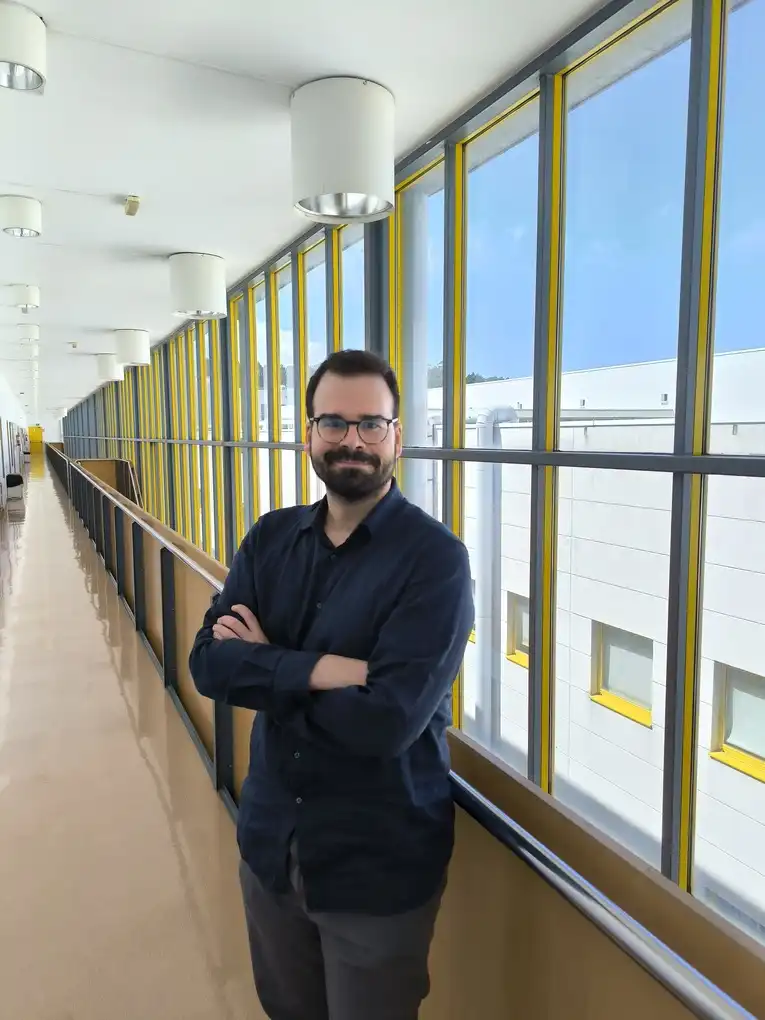
A Coruña, September 5, 2025.- The European Research Council (ERC) has selected the UDC researcher, Guillermo Lorenzo, for its DIGIPRO project, to receive one of its prestigious Starting Grants, in the amount of 1.5 million euros. DIGIPRO, led by Lorenzo, is focused on the development of a new class of computer models that allow advances in diagnosis, essentially on early detection of cancer progression.
This phenomenon is a crucial pathological event that consists of an increase in the malignancy of tumor cells and entails a greater clinical risk. Cancer progression initially manifests itself as changes in the spatial architecture of the tumor at a microscopic level, which can also be observed in more advanced phases at a macroscopic level, as non-tumor changes observed by medical imaging and other clinical biomarkers.
However, given that tumor progression manifests itself from a microscopic level to a macroscopic level, clinical detection can usually be performed starting with macroscopic medical imaging (for example, MRI) followed by a biopsy to analyze the tumor at a microscopic level.
Therefore, explains Lorenzo, “the current clinical protocols can lead to late detection of tumor progression and do not take into account the spatiotemporal dynamics (unique for each patient) of how this phenomenon happens, since the mechanisms that govern it are unknown.”
Thus, the DIGIPRO project seeks to develop “a new class of computer models to investigate the biophysical mechanisms that govern the progression of cancer at different spatial scales, from the microscopic level of tissue to the macroscopic level of the affected organ.”
Development of digital twins
In addition, DIGIPRO will develop samples of cancer patients equipped with these models to obtain personalized predictions of tumor progression that allow the detection of this phenomenon in the early microscopic phase using macroscopic data common in the clinical setting (for example, magnetic resonance imaging, clinical biomarkers). To this end, the computational technologies that will be designed in DIGIPRO will allow us to predict in a personalized way when a patient may experience a tumor progression event, or whether it will be crucial for clinical decision making (for example, when performing tests or selecting treatments).
The project will focus on the progression of prostate canker with a new diagnosis and favorable risk, so that the clinical sequence includes abundant micro and macroscopic data. Therefore, it is hoped that the results of the project can also be applied to other types of tumors.
From this success, the discoveries about the biology of tumor progression and the personalized prediction technologies that are developed in the project could represent a paradigm shift in the clinical management of tumors in the future, moving from the current standard of observational type and based on population data to a new predictive and personalized strategy for the cancer of each patient. In addition, the biomathematical models and computational technologies of the project can also assist in the investigation of other multiscale progressive phenomena in medicine, such as Alzheimer’s and arteriosclerosis, and in education, such as fracture.
Outstanding track record in mathematics applications
Guillermo Lorenzo is a teacher from Camiños, Canais and Portos at the University of Coruña (UDC), where he also obtained a master’s degree in Research in Civil Teaching and a PhD in the area of Computational Methods in Teaching. He continued his academic career at institutions of international prestige, such as the University of Pavia (Italy), the University of Texas at Austin (USA) and the Health Research Institute of Santiago de Compostela. Since 2024 he returned to UDC, where he is a researcher Ramón y Cajal in the Group of Numerical Methods in Teaching (GMNI) of the Department of Mathematics and based at the Escola de Enxeñeiros de Camiños, Canais e Portos of UDC. Thanks to this prestigious contract from the Ministry of Science, he leads a research team in computational oncology within the GMNI, attached to the Center for Technological Innovation in Building and Civil Engineering (CITEEC). Additionally, he is an external collaborator at the Oden Institute for Computational Engineering and Sciences of the University of Texas in Austin (USA), where two professors Thomas E. Yankeelov and Thomas J. R. Hughes collaborate with the groups.
His research focuses on three broad lines: (1) understanding the biophysical mechanisms that influence the development and treatment of cancer through biomathematical models, (2) developing precise and efficient computational methods to solve these models and adjusting them to the data available from individual patients, and (3) applying these computational technologies to generate predictions. Personalized tumor samples that can support decision making in clinical oncology. In recent years, we have also started researching hybrid approaches to mechanistic learning, which combine biomathematical models with artificial intelligence techniques. These methods have important applications in clinical oncology, such as the design of biomarkers, the creation of risk classifiers or the development of high-speed computational techniques for tumor prediction.
As Guillermo Lorenzo himself explains, obtaining an ERC Starting Grant constitutes “a decisive boost for my research career”, allowing for the consolidation of one’s own team, the availability of two resources necessary to develop the project and advance the scientific career. The preparation of the proposal, assistance or support provided by the Offices of Recruitment of Research Personnel (OCPI) and of International Projects (OPI) of the UDC, both in the review of documentation and in the preparation of the interview, as well as the support services for the preparation of proposals of the Oportunius program of the Xunta de Galicia, which were decisive in completing this important recognition.
Posted by: UDC Communications Office